A Tribute to Julie Samuels 1944-2024
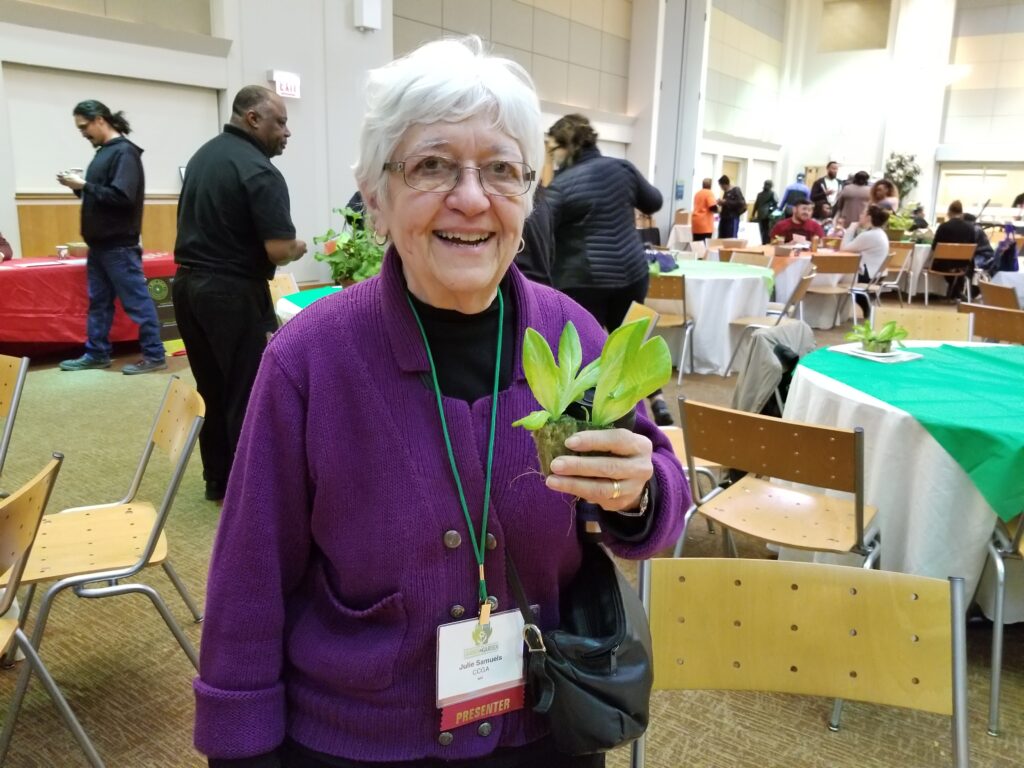
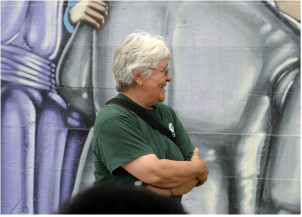
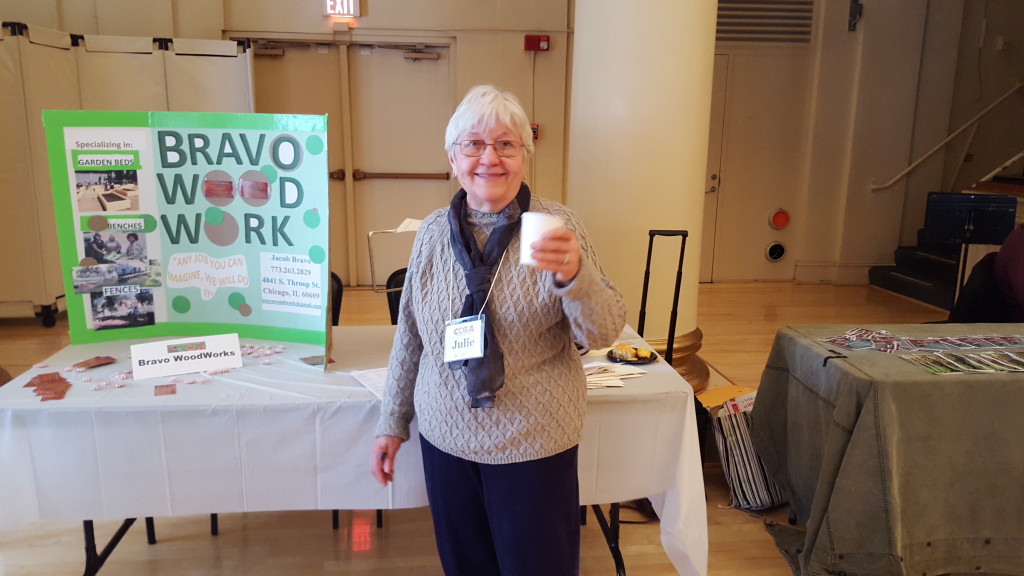
It was with deep sadness and heavy hearts that we learned of the death of our colleague and friend Julie Samuels. All of us at CCGA who knew and worked with Julie, those of us who stood by her side at workshops and in gardens were heartbroken by this loss. We had known Julie as an unstoppable force, so this news was hard to bear. Julie seemed to have boundless energy and she brought a tireless persistence to her most treasured work as a community organizer who helped create CCGA and continued with tireless advocacy to make it what it is today. The narrative below is from the Samuels family.
Julie Samuels passed away on Friday, July 19, 2024. She is survived by her husband of over fifty years and biggest cheerleader, Bruce, and her beloved children Rachel (Ty Smith), Aaron (Veneta), and Noah.
Julie was born on June 14, 1944 in Cleveland. She attended Miami University in Ohio at a time when Freedom Riders were being trained there in nonviolent resistance. She graduated in 1966 and moved to New York City where she worked visiting families to provide social work support. In the course of her work, she met Bruce, who was doing research on the new Head Start program, Julie and Bruce were married in 1968 and moved to Oak Park in 1973.
Julie and Bruce were lifelong champions of social and environmental issues. A social justice issue confronted Julie soon after moving to Oak Park. When she and Bruce applied for a mortgage for their own home, they were denied because it was “too old” – an excuse used to justify abandoning neighborhoods threatened with racial change. However, Julie was a community organizer at heart, and she took leadership in a the coalition to fight these “redlining” practices, finally achieving national legislation to end the practice. She was interviewed about her work on 60 Minutes.
Julie’s environmental work began in her own life and extended to many sorts of activism. She believed in reduce-reuse-recycle and practiced it before the issue was well known. She served on the boards of the Chicago Recycling Coalition, the Safer Pest Control Project, and the Illinois Environmental Council.
She started a food co-op because she believed food should be “for people and not for profit.” Extending this interest, she worked extensively to support community gardens in the Chicago communities of Austin, North Lawndale, and Englewood – especially working with Mrs. Lillian Drummond at the Austin Satellite Senior Center. To Julie, gardens built community and strengthened people’s power to address environmental and social justice concerns.
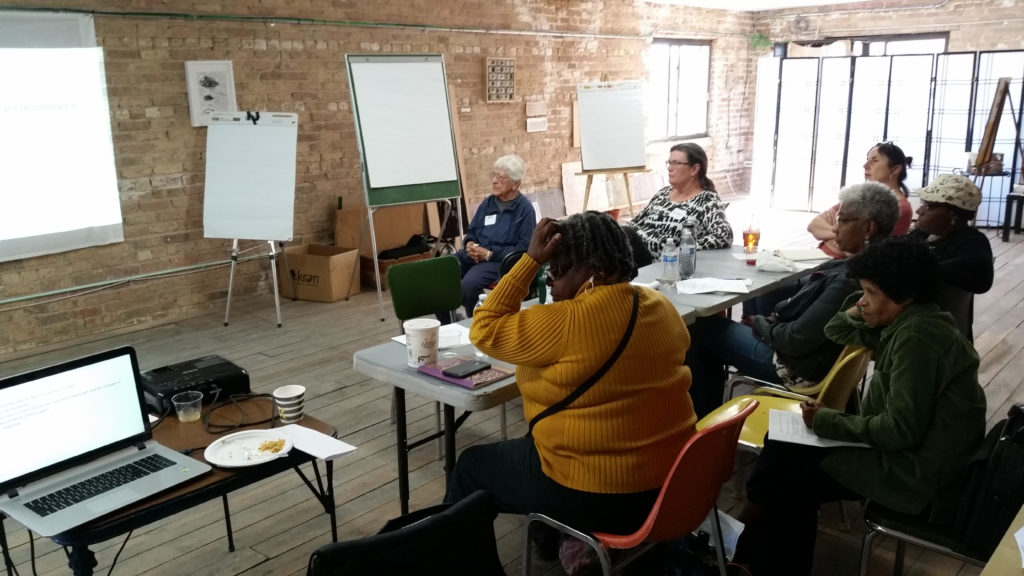
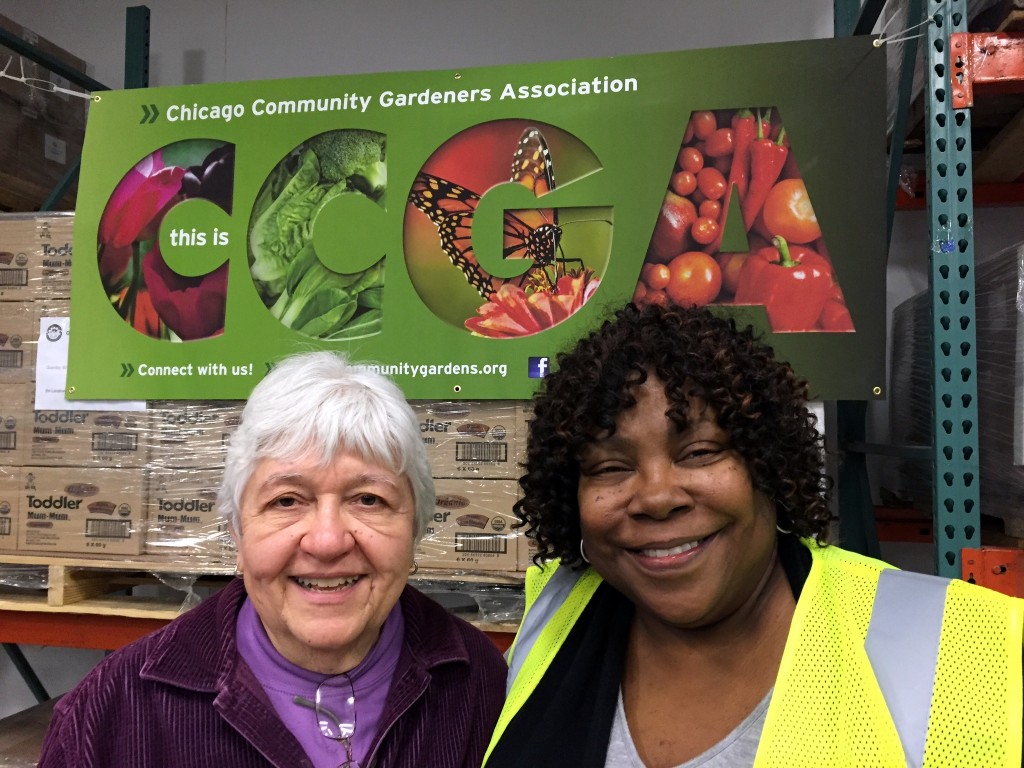
Over the years, Julie and Bruce furthered these issues through government and political work. Julie worked with other residents to design the village recycling program in the 1980s and later worked to establish Southeast Oak Park Community Organization. She was active in village government commissions and in supporting candidates for local and State offices. For seven years, she served as coordinator for the Illinois Affordable Budget Coalition to provide affordable utilities for low-income residents. She helped start the Green Party in Illinois and ran as its candidate for State Representative in 2004 and Lieutenant Governor in 2006. Governor Quinn appointed her to the Chicago State University Board of Trustees. She worked with Open Lands from 1994 – 2013 doing community outreach and serving as Community Gardens Coordinator, and after that, she continued community garden work including teaching at the Garfield Park Conservatory and volunteering with the Chicago Community Gardeners’ Association.
Family and friends were central in Julie’s life. She volunteered in her children’s schools and always kept an open door to their friends. She welcomed and appreciated her children’s participation in her community activities. She shared laughs with her bridge group and her breakfast group (Women Organized for Meaningful Breakfasts or WOMB).
Julie once said “a sustainable community is one that creates a small footprint and is self-sufficient, where money is recycled through locally owned businesses, where waste and toxins are eliminated, and local residents’ talents, skills, and insights are sought after and respected.”